Overview of Drivers, Receivers, and Transceivers
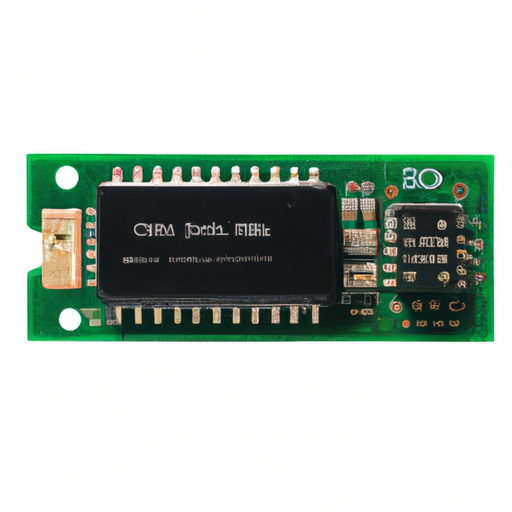
The CFR-12JB-52-110R, while a specific component, represents a broader category of electronic devices that play crucial roles in various applications. Below is a detailed exploration of the core functional technologies associated with drivers, receivers, and transceivers, along with relevant application development cases.
Core Functional Technologies
1. Drivers - **Function**: Drivers are essential for controlling and powering other electronic components. They amplify input signals to drive loads effectively, ensuring that devices operate as intended. - **Key Technologies**: - **MOSFET Drivers**: Used for switching applications, providing high-speed operation and efficiency. - **BJT Drivers**: Suitable for linear applications, offering good gain and linearity. - **Op-Amps**: Configured as voltage followers to buffer signals without loading the source. - **Applications**: - **Motor Control**: In robotics and automation, drivers control the speed and direction of motors. - **LED Drivers**: Used in lighting applications to regulate current and ensure consistent brightness. - **Audio Amplification**: Drivers amplify audio signals for speakers and headphones.
2. Receivers - **Function**: Receivers accept incoming signals, demodulate them, and convert them into a usable format for further processing. - **Key Technologies**: - **RF Receivers**: Used in wireless communication, capable of receiving signals over various frequencies. - **Infrared Receivers**: Common in remote controls, they detect infrared signals and convert them into electrical signals. - **DSPs**: Digital Signal Processors that handle complex signal processing tasks for audio and video. - **Applications**: - **Wireless Communication**: Used in devices like smartphones and tablets for data transmission. - **Remote Controls**: Infrared receivers in consumer electronics allow for wireless operation. - **Data Acquisition**: Receivers in industrial settings collect data from sensors for monitoring and control.
3. Transceivers - **Function**: Transceivers combine the functionalities of both transmitters and receivers, enabling bidirectional communication. - **Key Technologies**: - **RF Transceivers**: Facilitate wireless communication by modulating and demodulating signals. - **Optical Transceivers**: Convert electrical signals to optical signals and vice versa, used in fiber optic communications. - **Ethernet Transceivers**: Enable data transmission over Ethernet networks, supporting various speeds and protocols. - **Applications**: - **Cellular Networks**: Transceivers are critical for mobile communication, allowing devices to connect to cellular towers. - **Wi-Fi Systems**: Used in routers and access points to provide wireless internet connectivity. - **Satellite Communications**: Transceivers enable long-distance communication via satellites.
Application Development Cases
1. Internet of Things (IoT) Devices - **Case Study**: Smart home systems utilize RF transceivers to connect devices like smart thermostats, lights, and security cameras to a central hub. This integration allows for remote monitoring and control via smartphones, enhancing convenience and energy efficiency.
2. Automotive Systems - **Case Study**: The implementation of CAN transceivers in vehicles facilitates communication between various electronic control units (ECUs). This real-time data exchange improves vehicle diagnostics, safety features, and overall performance.
3. Industrial Automation - **Case Study**: RS-485 drivers and receivers are employed in industrial automation for robust communication over long distances. This technology is particularly effective in environments with high electromagnetic interference, ensuring reliable data transmission for control systems.
4. Telecommunications - **Case Study**: Optical transceivers are developed for high-speed data transmission in fiber optic networks. These transceivers support high bandwidth and long-distance communication, which is essential for modern internet infrastructure and data centers.
5. Consumer Electronics - **Case Study**: Bluetooth transceivers are integrated into wireless headphones, allowing for seamless audio streaming from smartphones and other devices. This application emphasizes the importance of low power consumption and compact design in consumer products.
Conclusion
Drivers, receivers, and transceivers are integral components in modern electronic systems, enabling a wide array of applications across various industries. Understanding their core technologies and exploring real-world application cases can provide valuable insights for engineers and developers. For further exploration, industry journals, technical papers, and manufacturer resources are excellent sources for specific articles and case studies related to these components.


